
In the Philippines, telecommuting is a word that is not usually thrown around in the corporate setting. However, it’s becoming the new norm under different terms like work-from-home or freelancing.
Telecommuting is any form of employment wherein an employee works in a setting outside of a typical office and uses technology to complete the assigned tasks and communicate with clients and fellow employees.
The model was first implemented in 1970 when, much like how it is today, emerging technologies made work accessible even in locations outside the office. Nowadays, telecommuting is emerging—thanks to reliable Internet connections and high-powered mobile devices.
Some globally-known companies have implemented telecommuting to excellent results. Different industries and departments like sales, customer service, marketing, and IT have benefited from this policy.
As HR professionals or members of a recruitment firm, it is essential to know whether telecommuting is something that will be advantageous to the corporation you are aiding since your applicants may find it beneficial to them.
This infographic shows the numbers behind the success of telecommuting, as well as the good and the bad of this work model to know if executing it would yield positive results for the company.
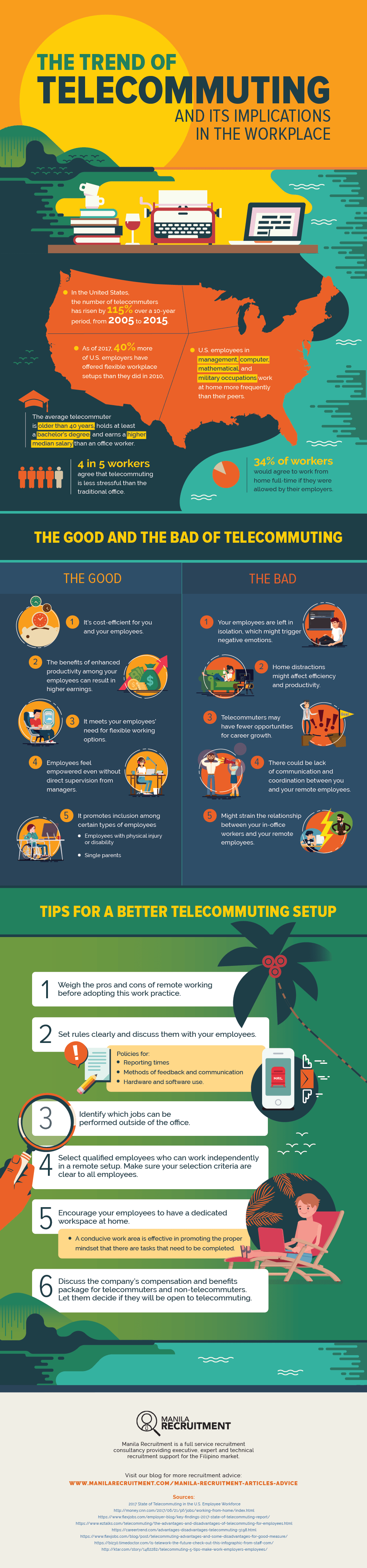
Infographic source: https://manilarecruitment.com/manila-recruitment-articles-advice/telecommuting-implications-workplace-infographic/
The Trend of Telecommuting and its Implication in Workplace
June 22, 2018
A dedicated full-time digital marketer with 12+ years of experience in the industry. Since 2015, he has been successfully running infographicportal.com, a platform that showcases high-quality infographics across various topics. Nagendra's expertise lies in creating and executing effective digital marketing strategies that drive engagement and growth. His passion for visual storytelling and commitment to excellence has made him a respected figure in the digital marketing community.